
Wayfinding & Directional Signs for Hospitals in St. Charles County
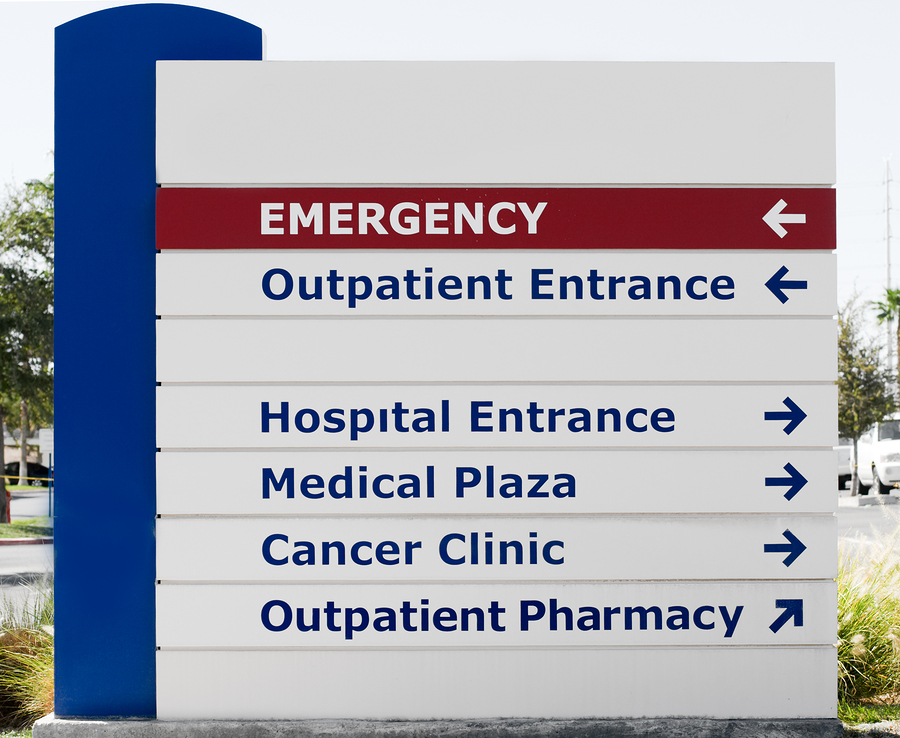
Hospitals, clinics, urgent care centers, and medical office buildings all have one thing in common: people need to know where to go.
That sounds simple, but in a healthcare setting, directions matter more than almost anywhere else. A patient may be arriving for an appointment while feeling nervous. A family member may be looking for the emergency entrance. A visitor may be trying to find the correct parking area, elevator, department, restroom, or waiting room. A staff member may be moving between buildings quickly during a busy shift.
When signs are clear, consistent, and placed in the right locations, the entire facility feels easier to navigate. When signs are confusing, outdated, too small, poorly placed, or inconsistent, the experience can feel frustrating before a patient ever reaches the front desk.
For hospitals and healthcare facilities in St. Charles County, including Wentzville, O’Fallon, Lake St. Louis, St. Peters, St. Charles, Dardenne Prairie, Cottleville, Weldon Spring, Flint Hill, and nearby Greater St. Louis communities, wayfinding and directional signage is more than a finishing touch. It is part of how people experience the facility.
At Twin Clover Sign and Graphics, we help businesses and organizations create custom, high-quality signage that guides, informs, and supports the people who rely on it. For healthcare spaces, that means signs that are professional, readable, durable, and thoughtfully designed around the real movement of patients, visitors, and staff.
Why Wayfinding Signs Matter in Hospitals and Healthcare Facilities
A hospital or medical office can be a stressful place to visit. Even a short appointment can feel overwhelming when someone is unsure where to park, which entrance to use, or how to find a specific department.
Good wayfinding signs reduce that uncertainty. They help people make quick decisions without needing to stop and ask for help at every turn. That can make a noticeable difference in the overall patient and visitor experience.
Wayfinding signs also help staff. If visitors can easily find the main entrance, registration desk, imaging department, lab, pharmacy, restroom, or elevator, employees spend less time giving repeated directions. That does not replace the importance of helpful staff, but it does create a smoother environment for everyone.
There is also a trust factor. A healthcare facility with clear signs feels organized and attentive. When exterior signs, lobby directories, wall signs, parking signs, and department signs all work together, the facility feels more professional and easier to understand.
What Are Wayfinding and Directional Signs?
Wayfinding signs are the signs that help people understand where they are, where they need to go, and how to get there. Directional signs are a major part of that system. They point people toward entrances, departments, parking areas, elevators, exits, restrooms, reception desks, waiting rooms, and other important destinations.
In a hospital or healthcare setting, wayfinding signage can include:
- Exterior building signs
- Monument signs
- Parking lot directional signs
- Emergency room signs
- Entrance signs
- Lobby directories
- Department signs
- ADA room identification signs
- Elevator and stairwell signs
- Wall graphics
- Window graphics
- Temporary construction or detour signs
- Safety and restricted area signs
Each type of sign has a job to do. Some help people find the facility from the road. Some guide cars through a parking lot. Some help visitors choose the correct entrance. Others help people navigate hallways, elevators, floors, departments, and patient areas.
The best wayfinding systems do not rely on one sign to do everything. They use a connected system of signs that appear at the right decision points.
Exterior Wayfinding Starts Before Someone Walks Inside
For many visitors, the wayfinding experience begins from the road. If a healthcare facility is located on a busy street, within a medical campus, or near several other buildings, clear exterior signage is essential.
Exterior signs help people answer basic questions quickly:
Where is the hospital or clinic?
Which building is the correct one?
Where is the emergency entrance?
Where do patients park?
Where do visitors park?
Where is the main entrance?
Where is the drop-off area?
Where do deliveries go?
This is especially important for facilities with multiple entrances. A hospital may have a main entrance, emergency entrance, outpatient entrance, surgery entrance, staff entrance, loading area, and medical office entrance. If those signs are not clear from the parking lot and drive lanes, people may circle the property, park in the wrong area, or walk to the wrong door.
Outdoor signs need to be readable from a distance. They also need to be durable enough for Missouri weather, including sun, rain, wind, snow, and seasonal temperature changes. For some healthcare facilities, lighted or illuminated signs can also be helpful, especially for emergency rooms, urgent care centers, and facilities with early morning, evening, or overnight activity.
At Twin Clover Sign and Graphics, our outdoor signage services can support this part of the wayfinding system with building signs, directional signs, parking signs, monument signs, and other custom exterior signs designed to improve visibility and navigation.
Parking Lot Signs Help Control the First Point of Confusion
Parking is one of the most common sources of frustration at healthcare facilities. If the parking lot is unclear, the visitor experience starts with uncertainty.
Hospital parking signs should make it easy to identify patient parking, visitor parking, staff parking, handicap accessible parking, emergency parking, short-term drop-off, outpatient parking, and restricted areas. In larger facilities, signs may also need to direct people toward different lots or entrances based on department.
A strong parking lot signage plan should consider how people arrive by car. A sign placed after the turn is not as helpful as one placed before the decision point. The same is true for arrows, lane signs, and entrance signs. People need directions when they are making the decision, not after they have already passed the correct route.
Parking lot signs should also be consistent with the rest of the facility. If the outside signs use one name for a department and the inside signs use another, visitors can become confused. A good signage system uses the same terminology from the road to the parking lot to the lobby to the department entrance.
Emergency Room Signs Need Special Attention
Emergency room signage is one of the most important parts of a hospital wayfinding system. When someone is looking for the emergency department, speed and clarity matter.
Emergency signs should be highly visible, direct, and easy to understand. They should guide drivers from the road to the correct drive lane, parking or drop-off area, and entrance. The signage should be readable at night and during poor weather conditions whenever possible.
ER signs should also avoid clutter. A driver looking for emergency care should not have to sort through too much information at once. The message needs to be simple and immediate.
For healthcare facilities in St. Charles County, this is especially important in areas with growing traffic, expanding medical campuses, and multiple nearby businesses. A clear emergency sign system can help reduce confusion during moments when people are already under pressure.
Interior Wayfinding Should Feel Calm and Consistent
Once someone enters the building, the signage should continue the same clear journey. The lobby is usually the first interior decision point, so it needs to answer the most important questions quickly.
A helpful lobby sign or directory may identify:
- Registration
- Information desk
- Elevators
- Restrooms
- Waiting rooms
- Pharmacy
- Laboratory
- Imaging or radiology
- Surgery
- Specialty clinics
- Billing
- Cafeteria
- Exits
The exact list depends on the facility, but the goal is always the same. People should be able to look up, understand their next step, and move with confidence.
Interior wayfinding signs should be placed where people naturally pause or make decisions. That includes hallway intersections, elevator banks, stairwells, department entrances, waiting areas, and exits. If a visitor has to walk too far without reassurance, they may start to wonder if they are still going the right way.
This is where consistency becomes critical. Fonts, colors, arrows, icons, terminology, and sign placement should all feel connected. When every sign looks like part of the same system, people can understand the facility faster.
ADA and Accessibility Considerations for Hospital Signs
Accessibility should be considered from the beginning of any healthcare signage project. Hospitals and clinics serve people of all ages and abilities, including patients and visitors with vision limitations, mobility challenges, injuries, illness, or stress.
The ADA Standards for Accessible Design include guidance for signs with tactile characters, braille, visual contrast, non-glare finishes, and placement. For example, many permanent room identification signs require tactile characters and braille. Visual characters should contrast with their background, and signs should use non-glare finishes to improve readability.
In a healthcare facility, accessible signage is not just about meeting requirements. It is about creating an environment where more people can move through the space with confidence and dignity.
Common accessibility-focused signs in hospitals and medical offices include restroom signs, room number signs, elevator signs, stair signs, accessible route signs, exit signs, and department identification signs. These signs should be planned carefully, fabricated correctly, and installed in appropriate locations.
Because accessibility requirements can be detailed, hospitals and medical offices should avoid treating ADA signage as an afterthought. It should be integrated into the overall wayfinding plan.
Design Elements That Make Hospital Wayfinding Signs Work
Good hospital signage is not just about putting words on a wall. It is about designing information so people can understand it quickly.
A successful wayfinding sign system usually includes several key design elements.
First, the text must be easy to read. Hospitals are not the place for overly decorative fonts on directional signs. Clean, simple lettering is usually best.
Second, the information should be prioritized. The most important destination should be easiest to see first. If a sign tries to say too much at once, people may miss the message they actually need.
Third, arrows need to be clear. A confusing arrow can send someone the wrong direction, even if the words are correct.
Fourth, color can be useful when it is used consistently. For example, different floors, departments, wings, or parking areas may be organized by color. However, color should support navigation, not replace clear wording.
Fifth, icons can help people process information faster. Symbols for restrooms, elevators, stairs, parking, emergency, pharmacy, and information desks can make signs easier to understand at a glance.
Finally, the signage should match the facility’s brand without sacrificing function. A hospital sign can look polished, professional, and on-brand while still being clear and practical.
Common Hospital Wayfinding Problems to Avoid
Many healthcare facilities already have signs, but that does not always mean the signs are working well. Over time, departments move, buildings expand, entrances change, and temporary signs become permanent by accident.
One common problem is inconsistent naming. A sign outside may say “Radiology,” another inside may say “Imaging,” and another near the hallway may say “X-Ray.” To the facility, those may feel connected. To a visitor, they may seem like different destinations.
Another common issue is poor placement. A sign may look great but appear too late in the route. If visitors need direction at a hallway intersection, a sign placed after the turn is not solving the problem.
Size is another factor. If a sign is too small to read from the proper distance, it can create hesitation. This is especially important in parking lots, large lobbies, long hallways, and elevator areas.
Healthcare facilities should also watch for temporary paper signs. Taped-up signs may be necessary during short-term changes, but when they remain for months, they can make the facility feel disorganized. Custom temporary signs or updateable sign systems often provide a cleaner solution.
Damaged, faded, outdated, or mismatched signs should also be addressed. Signage is part of the visual condition of the facility. If the signs look neglected, that impression can affect how people perceive the space.
Custom Hospital Signs vs. Generic Signs
Generic signs may seem like an easy solution, but healthcare facilities usually need a more thoughtful approach. Every hospital, clinic, and medical office has a different layout, parking setup, patient flow, department structure, and brand identity.
Custom hospital signs can be designed around the actual building. That means the sign locations, wording, materials, colors, and installation details can be planned for the facility’s needs.
Custom signage is especially useful for:
- Medical office buildings with multiple tenants
- Hospitals with several departments or entrances
- Clinics that share parking areas
- Urgent care centers with high visibility needs
- Specialty practices with unique patient flow
- Facilities undergoing renovation or expansion
- Buildings that need consistent branding across interior and exterior signs
At Twin Clover Sign and Graphics, we create custom signage solutions that can include indoor signs, outdoor signs, directional signs, window graphics, wall murals, banners, vehicle graphics, and more. For healthcare facilities, that full-service approach can help create a more cohesive sign system from the outside of the building to the inside.
Healthcare Facilities That Benefit From Wayfinding Signs
Wayfinding signs are important for hospitals, but they are not limited to large medical centers. Many healthcare-related businesses and organizations can benefit from better directional signage.
Hospitals need comprehensive systems that guide patients, visitors, staff, vendors, and emergency traffic across parking areas, entrances, lobbies, hallways, elevators, departments, and exits.
Urgent care centers need signs that are easy to see from the road and simple to follow once visitors arrive.
Medical office buildings need exterior identification, suite directories, tenant signs, lobby signs, room signs, and parking signs.
Clinics need signs that help patients find reception, exam rooms, restrooms, checkout areas, and specialty departments.
Dental offices, chiropractic offices, physical therapy clinics, imaging centers, labs, and wellness offices may not need a full hospital-scale system, but they still benefit from professional signage that makes the space easier to navigate.
Senior care and assisted living facilities also need especially clear wayfinding. Visitors, residents, families, and staff should be able to move through the space with as little confusion as possible.
Why Local Signage Support Matters in St. Charles County
Healthcare facilities in St. Charles County serve a growing region. Communities like Wentzville, O’Fallon, St. Peters, Lake St. Louis, and St. Charles continue to see development, traffic, and expanding commercial areas. That growth increases the need for signage that can help people find medical facilities quickly and move through them easily.
Local context matters. A clinic in Wentzville may have different visibility needs than a medical office in St. Peters. A healthcare building in O’Fallon may have different traffic flow than a facility near Lake St. Louis. A hospital campus in St. Charles may need a more layered signage plan than a smaller specialty clinic in Dardenne Prairie or Cottleville.
Working with a local sign company can make the process easier. Site visits, measurements, design reviews, material recommendations, installation planning, and future updates are all more manageable when your sign partner understands the area and can communicate closely throughout the project.
Twin Clover Sign and Graphics is based in Wentzville, MO, and serves businesses and organizations throughout St. Charles County and nearby communities. That local presence helps us support healthcare signage projects with a practical understanding of the region.
How Twin Clover Sign and Graphics Approaches Wayfinding Projects
A strong wayfinding project starts with listening. Before designing signs, it is important to understand the facility, the people using it, and the areas where confusion happens most often.
Our process can include consultation, planning and design, skilled fabrication, expert installation, and project follow-up. For a healthcare signage project, that may begin with questions like:
Where do visitors most often get confused?
Which entrances need clearer identification?
Are departments named consistently?
Are parking areas easy to understand?
Are signs visible from the right distance?
Are ADA signs needed or outdated?
Will departments, tenants, or directories need to be updated later?
Are there construction zones or temporary routes to consider?
Once the goals are clear, the signage plan can be built around the facility. This may include exterior signs, interior signs, directional signs, ADA room signs, wall graphics, parking signs, or updateable directories.
Fabrication matters because healthcare signs need to look clean, professional, and durable. Installation matters because even a well-designed sign can fail if it is placed in the wrong spot. A good sign system depends on both.
Creating a Better Experience Through Better Signs
Hospital wayfinding is not just about navigation. It is about experience.
A patient who easily finds the right parking area, entrance, department, and waiting room starts the visit with less stress. A visitor who can find a loved one’s room without wandering the halls feels more supported. A staff member who does not have to give the same directions all day can stay more focused on their work.
Clear signage helps a healthcare facility feel more organized, more professional, and more welcoming.
That does not mean every facility needs the same sign package. Some may need a full wayfinding overhaul. Others may only need updated directional signs, new parking signs, refreshed lobby signs, ADA room signs, or better department identification. The right solution depends on the space.
Planning Your Hospital or Medical Office Signage Project
If your facility is considering new or updated wayfinding signs, start by walking the property like a first-time visitor.
Drive in from the main road. Look for the building sign. Try to find the correct parking area. Walk to the entrance. Enter the lobby. Find the elevator, restroom, registration desk, and a specific department. Pay attention to where you hesitate.
Those hesitation points are often where signage can improve.
It may also help to ask staff what questions they hear most often. If visitors regularly ask where the lab is, where imaging is, where to check in, or which hallway leads to the elevator, those are signs that the wayfinding system may need attention.
From there, a custom sign plan can address the most important areas first while keeping the overall facility in mind.
Custom Wayfinding and Directional Signs in St. Charles County
For hospitals, clinics, urgent care centers, and medical office buildings in St. Charles County, wayfinding signage plays a quiet but important role every day. It helps people move through healthcare spaces with more confidence, less confusion, and a better overall impression of the facility.
Twin Clover Sign and Graphics provides custom signage solutions for businesses and organizations throughout Wentzville, O’Fallon, Lake St. Louis, St. Peters, St. Charles, Dardenne Prairie, Cottleville, Weldon Spring, Flint Hill, Foristell, and the surrounding Greater St. Louis area.
Our services include indoor signs, outdoor signs, directional signs, custom business signs, window graphics, wall murals, vehicle wraps and graphics, banners, trade show displays, design, fabrication, and installation. For healthcare environments, those services can come together to create a sign system that is clear, professional, and built around the way people actually use the space.
If your hospital, clinic, urgent care center, or medical office needs clearer wayfinding or updated directional signs, we would be happy to help you think through the best next step.
Contact Twin Clover Sign and Graphics through our contact us page to schedule a consultation for custom healthcare signage in St. Charles County.
Back