
Custom Hospital Signs in Wentzville & O’Fallon
Hospitals, clinics, medical offices, and healthcare facilities are places where clarity matters. Patients may be arriving for an appointment, visiting a loved one, looking for the emergency entrance, finding the right department, or trying to navigate a medical campus they have never visited before. In those moments, signage is not just decoration. It is part of the patient experience.
For healthcare facilities in Wentzville, O’Fallon, Lake St. Louis, St. Peters, St. Charles, and the surrounding St. Charles County area, custom hospital signs help create a space that feels organized, professional, and easier to navigate. The right signage can guide visitors from the parking lot to the front desk, direct patients to departments, support staff efficiency, and reinforce the trust people expect from a medical environment.
At Twin Clover Sign and Graphics, we create custom, high-quality signage for businesses and organizations that need signs to do more than simply display a name. Healthcare signage needs to communicate clearly, hold up in high-traffic spaces, and support the unique flow of each facility. That is where a thoughtful, full-service sign process makes a real difference.
What Are Custom Hospital Signs?
Custom hospital signs are signs designed specifically for the needs, layout, branding, and daily operations of a healthcare facility. They can include exterior signs, interior signs, directional signs, ADA signs, room identification signs, parking signs, safety notices, wall graphics, and more.
Unlike generic signs, custom healthcare signage is built around how people actually move through a facility. A hospital, urgent care center, dental office, imaging center, or medical office building may have multiple entrances, departments, floors, check-in areas, waiting rooms, restricted zones, and staff-only spaces. A well-planned sign system helps make all of those areas easier to understand.
Good hospital signage answers questions before people have to ask them. Where do I park? Which entrance should I use? Where is the emergency room? How do I find radiology, lab services, surgery, maternity, pediatrics, or the pharmacy? Where is the restroom? Which hallway leads back to the lobby?
When the answers are clear, patients and visitors feel more confident. Staff members also spend less time redirecting traffic and answering the same wayfinding questions throughout the day.
Why Hospital Signage Matters in Wentzville and O’Fallon
Wentzville and O’Fallon are growing communities with a wide range of healthcare needs. From large medical facilities to smaller clinics and specialty offices, healthcare providers in this area serve families, commuters, seniors, children, and visitors from across St. Charles County.
As more medical practices, urgent care centers, dental offices, therapy clinics, and specialty providers serve the region, professional signage becomes an important part of how these facilities present themselves. A sign is often one of the first things a patient sees. Before a person speaks to a receptionist or provider, they are already forming an impression based on the exterior sign, entrance sign, parking signs, lobby signs, and overall organization of the building.
In healthcare, that first impression matters. A clean, consistent, easy-to-read signage system helps a facility feel more trustworthy. It shows that the details have been considered. It also helps reduce stress for people who may already be anxious, running late, or focused on a health concern.
For medical facilities in O’Fallon, Wentzville, Lake St. Louis, St. Peters, St. Charles, Cottleville, Dardenne Prairie, Weldon Spring, Foristell, and nearby areas, custom hospital signage can support both visibility and patient care.
Custom Hospital Signs Start Outside the Building
A patient’s experience does not begin at the front desk. It often begins from the road.
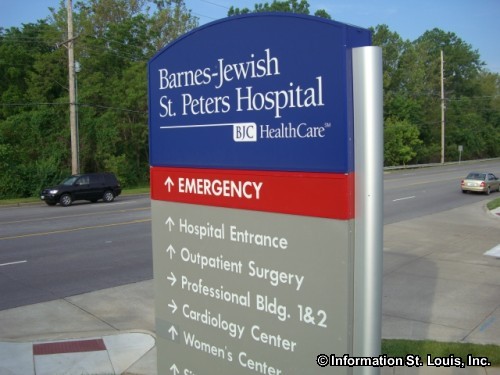
Exterior signs help people identify the facility, find the correct entrance, and understand where they should go before they even get out of the car. This is especially important for hospitals and medical buildings with multiple entrances or separate departments.
Common exterior healthcare signs include:
- Building signs
- Monument signs
- Pylon signs
- Main entrance signs
- Emergency entrance signs
- Urgent care signs
- Parking lot signs
- Patient drop-off signs
- Visitor parking signs
- Staff parking signs
- Ambulance and service entrance signs
- Directional signs around a medical campus
Outdoor hospital signs need to be visible, durable, and easy to read from the appropriate distance. A sign that looks good up close may not be effective if it cannot be understood from the road or parking lot. Placement, contrast, lighting, size, and material all play a role.
At Twin Clover Sign and Graphics, outdoor signs are one of the core types of signs we create. For healthcare facilities, that means designing exterior signage that supports both visibility and navigation while still looking professional and aligned with the brand of the facility.
Interior Hospital Signs Guide Patients Through the Facility
Once patients and visitors enter the building, interior signs help them continue their journey. In a healthcare environment, the inside of the building can be just as confusing as the outside, especially for first-time visitors.
Interior hospital signs may include:
- Lobby signs
- Reception signs
- Wall-mounted directories
- Department signs
- Hallway directional signs
- Elevator signs
- Stairwell signs
- Restroom signs
- Waiting room signs
- Patient room signs
- Office identification signs
- Check-in and check-out signs
- Lab, imaging, pharmacy, and therapy signs
- Staff-only and restricted area signs
Interior signage should feel cohesive. When signs are mismatched, outdated, or placed inconsistently, the facility can feel harder to navigate. A patient may see one type of sign in the lobby, another style near the elevator, and temporary paper signs taped to walls near departments. That can make the space feel less organized than it really is.
A custom interior sign system creates consistency. It brings together the facility’s colors, typography, logo, terminology, and layout into one clear visual language. This is especially valuable in medical office buildings where several providers or departments share the same space.
Wayfinding Signs Help People Move With Confidence
Wayfinding is one of the most important parts of hospital signage. Directional signs help people understand where they are, where they need to go, and how to get there.
Healthcare wayfinding should be simple, consistent, and placed at key decision points. These are the places where people naturally pause and choose a direction, such as parking lot entrances, building entrances, lobbies, hallway intersections, elevator banks, stairwells, and department corridors.
Effective medical wayfinding signs may point visitors toward:
- Emergency department
- Main entrance
- Registration
- Information desk
- Lab services
- Imaging or X-ray
- Surgery waiting
- Pharmacy
- Pediatrics
- Maternity
- Physical therapy
- Restrooms
- Elevators
- Exits
- Parking areas
A good wayfinding system should not overwhelm people with too much information at once. It should give the right information at the right time. For example, an exterior directional sign may point toward emergency, main entrance, and visitor parking. A lobby directory may provide a broader list of departments. A hallway sign may narrow the directions to the next immediate choice.
The goal is to reduce confusion. In a hospital or clinic, confusion can lead to delays, missed appointments, congestion, frustration, and extra work for staff. Thoughtful directional signs can make the entire facility feel easier to use.
ADA and Braille Signs for Healthcare Facilities
ADA signs and Braille signs are an important part of healthcare signage. Medical facilities serve people of all ages and abilities, so accessibility should be planned carefully.
ADA signage may be needed for permanent rooms and spaces, restrooms, elevators, stairwells, exits, accessible entrances, accessible parking, and other areas depending on the facility. These signs often require specific features such as tactile lettering, Braille, proper contrast, compliant placement, and readable character styles.
For hospitals, clinics, and medical offices, ADA signage should not feel like an afterthought. It should be part of the broader sign system so that accessibility, professionalism, and visual consistency work together.
Twin Clover Sign and Graphics provides ADA signs and Braille signs as part of our indoor sign solutions. For healthcare facilities in Wentzville, O’Fallon, and across St. Charles County, this can be an important part of creating a space that is easier for everyone to navigate.
Safety and Compliance Signs in Medical Environments
Hospitals and medical facilities also need signs that communicate safety instructions, restricted access, and important notices. These signs may not always be the most visually exciting, but they are essential.
Common safety and compliance signs may include:
- Authorized personnel only signs
- Restricted area signs
- Biohazard signs
- Fire exit signs
- Emergency exit signs
- No smoking signs
- Hand hygiene reminders
- Infection control notices
- Warning signs
- Evacuation route signs
- Staff instruction signs
- Visitor policy signs
These signs need to be clear, readable, and placed where people can see them. They also need to fit the tone of the facility. A medical office may want safety signs that are calm and professional, while a hospital department may need signs that are more direct and highly visible.
The best approach is to make safety signage part of a complete plan rather than adding one sign at a time without consistency. This helps the facility stay organized and professional while still communicating important information.
Branding Matters in Healthcare Signage
Hospital signs and medical office signs need to be functional first, but they should also support the brand of the facility. Branding in healthcare is about more than colors and logos. It is about trust, recognition, and consistency.
A polished sign system helps patients feel like they are in the right place. It also helps a medical facility look established and credible.
Branding can show up through:
- Exterior building signs
- Lobby signs
- Dimensional letters
- Logo signs
- Wall graphics
- Window graphics
- Color-coded wayfinding
- Department sign design
- Reception area signs
- Branded informational displays
At Twin Clover Sign and Graphics, we believe every project is unique and should reflect the individuality of the business or organization behind it. That idea is especially important for healthcare facilities. A pediatric clinic may want signs that feel warm and welcoming. A specialty medical office may want a clean and modern look. A large healthcare facility may need a more structured system that keeps the brand consistent across departments.
Custom signage helps bring those differences to life.
Wall Graphics, Window Graphics, and Environmental Design
Healthcare signage does not have to stop at room names and arrows. Wall graphics, window graphics, and murals can help shape the feel of a medical space.
A waiting room can feel calmer with soft, branded wall graphics. A pediatric hallway can feel more welcoming with colorful environmental graphics. Frosted window vinyl can add privacy to office areas, consultation rooms, or glass partitions. Mission statement walls, donor recognition displays, and branded murals can help tell the story of a healthcare organization.
Twin Clover Sign and Graphics creates window graphics, wall murals, indoor signs, and custom business signs, which can all be useful for healthcare environments. These types of graphics can help a facility feel less sterile while still staying professional.
For medical offices in Wentzville and O’Fallon, these details can make a patient’s visit feel more comfortable from the moment they walk in.
Choosing the Right Materials for Hospital Signs
Healthcare facilities are high-traffic environments. Signs may be touched, cleaned, bumped, exposed to carts or equipment, and viewed by hundreds or thousands of people over time. Materials matter.
Indoor signs may use acrylic, vinyl, dimensional lettering, ADA-compliant materials, printed panels, or other professional sign materials depending on the application. Outdoor signs may use weather-resistant materials such as aluminum, ACM panels, durable vinyl, illuminated sign components, or monument sign materials.
The right material depends on where the sign will be installed, how it will be viewed, how long it needs to last, and what kind of environment it will face.
For example, a lobby sign should look polished and brand-focused. A parking sign should be durable and readable from a vehicle. A patient room sign should be clear, consistent, and easy to maintain. A wall graphic should be installed cleanly and designed to fit the surface.
Twin Clover Sign and Graphics focuses on top-quality materials and detail-oriented craftsmanship, which is especially important for healthcare signage that needs to look professional over the long term.
The Importance of a Complete Hospital Signage Plan
One of the most common signage mistakes is treating every sign as a separate project. A facility adds one sign here, another sign there, a temporary notice somewhere else, and eventually the overall system feels disconnected.
A complete hospital signage plan looks at the entire visitor journey.
It considers questions like:
- How do people find the building from the road?
- Where do patients park?
- Which entrance should different visitors use?
- What do people see when they enter the lobby?
- Can someone find the front desk without asking?
- Are departments clearly labeled?
- Are elevators, restrooms, and exits easy to locate?
- Are ADA signs placed where needed?
- Are safety signs consistent and visible?
- Does the signage match the brand and tone of the facility?
When all of these details are planned together, the result is a cleaner and more useful signage system. This is helpful for new facilities, renovations, expansions, rebrands, and medical offices that have outgrown an older sign setup.
Our Sign Design and Installation Process
At Twin Clover Sign and Graphics, our process is built to make signage projects easier from start to finish. Hospital and healthcare signage can involve many details, so having a clear process helps keep the project organized.
Consultation Services
The first step is understanding the facility’s needs. This may include the building layout, patient flow, departments, brand standards, accessibility needs, safety requirements, and budget. For healthcare projects, this conversation is especially important because the signs need to support real daily use.
Planning and Design
Once the goals are clear, the signage plan begins to take shape. This includes deciding what signs are needed, where they should go, how they should look, and how they will work together as a system. Design should balance clarity, compliance, durability, and brand consistency.
Skilled Fabrication
After the design is approved, the signs are fabricated using materials suited for the project. This is where the quality of materials and craftsmanship becomes especially important. A healthcare sign should not only look good on installation day. It should be built to serve the facility well over time.
Expert Installation
Professional installation helps ensure signs are placed correctly, securely, and visibly. Sign placement can affect readability, accessibility, safety, and the overall success of the project. For healthcare environments, proper installation can also help minimize disruption to daily operations.
Satisfaction and Support
The goal is not just to make signs. It is to create signage that helps the facility function better and look more professional. Our team values collaboration, clear communication, and reliable service throughout the process.
Signs Healthcare Facilities Should Review Regularly
Even if your hospital, clinic, or medical office already has signs, it may be worth reviewing them from time to time. Healthcare spaces change. Departments move, entrances shift, parking lots get updated, offices expand, and branding evolves.
A simple signage audit can reveal areas where patients may be getting confused.
Start outside. Are the main entrance, emergency entrance, parking areas, and drop-off zones clearly marked? Can a first-time visitor understand where to go from the road? Are signs visible at night?
Then move inside. Can someone find check-in without asking? Are restrooms, elevators, exits, and departments clearly marked? Do signs use the same terminology throughout the building? Are there hallway intersections where visitors might hesitate?
Finally, look at the overall appearance. Are older signs faded, damaged, outdated, or inconsistent with newer signs? Are temporary paper signs still being used for permanent needs? Does the sign system reflect the quality of care the facility wants to communicate?
A signage refresh does not always mean replacing everything. Sometimes it means identifying the most important gaps and improving the areas that have the biggest impact on navigation and first impressions.
Custom Hospital Signs for Different Healthcare Settings
Healthcare signage is not one-size-fits-all. Different facilities need different solutions.
Hospitals and medical centers may need complete sign systems that include exterior signs, department signs, ADA signs, room identification signs, directional signs, safety notices, parking signs, and branded graphics.
Urgent care centers often need clear exterior visibility, hours signs, entrance signs, check-in signs, waiting room signs, and patient flow signage that helps people understand the process quickly.
Medical office buildings may need monument signs, tenant directories, suite signs, lobby signs, elevator signs, and wayfinding systems that serve multiple providers in one building.
Dental and orthodontic offices may focus on reception signs, window graphics, privacy vinyl, wall graphics, room signs, and exterior signs that make the office easy to recognize.
Specialty clinics, such as imaging centers, physical therapy offices, dermatology clinics, eye care offices, pediatric clinics, and women’s health practices, often need signage that blends professional clarity with a comfortable patient experience.
Twin Clover Sign and Graphics works with businesses and organizations across many industries, and healthcare facilities can benefit from that same custom approach.
Why Work With a Local Sign Company?
Working with a local sign company can make a healthcare signage project smoother. A local team understands the area, the pace of local business, and the importance of responsive communication.
For facilities in Wentzville, O’Fallon, St. Charles, St. Peters, Lake St. Louis, Cottleville, Dardenne Prairie, Weldon Spring, Foristell, Warrenton, Chesterfield, Maryland Heights, Bridgeton, Creve Coeur, and nearby St. Louis metro communities, Twin Clover Sign and Graphics offers a convenient local partner for custom signage.
Because we are a full-service sign shop, our team can help with design, production, and installation. That means your hospital or medical office does not have to coordinate separately with a designer, fabricator, and installer. The process is easier when the project is handled with one clear plan.
Common Hospital Signage Mistakes to Avoid
One common mistake is waiting until the last minute. Signage should be considered early in a construction, renovation, expansion, or rebranding project. Waiting too long can lead to rushed decisions, inconsistent design, or signs that do not fully support the facility’s layout.
Another mistake is using temporary signs for permanent problems. A printed paper sign taped to a wall may solve an issue for a day, but if it stays there for months, it can make the facility feel less professional.
A third mistake is focusing only on appearance. A sign can look beautiful but still fail if it is too small, hard to read, poorly placed, or unclear. In healthcare, readability and function come first.
It is also important not to overlook accessibility. ADA and Braille signs should be planned carefully, not added as a last-minute checklist item.
Finally, healthcare facilities should avoid inconsistent terminology. If one sign says “Imaging,” another says “Radiology,” and a directory says “X-ray,” visitors may wonder whether those are the same place. Clear, consistent language makes navigation much easier.
Frequently Asked Questions About Hospital Signs
What types of hospital signs can Twin Clover Sign and Graphics create?
Twin Clover Sign and Graphics can create a wide range of custom healthcare signs, including exterior signs, indoor signs, directional signs, ADA signs, Braille signs, patient room signs, parking signs, safety signs, lobby signs, wall graphics, and window graphics.
Do medical offices need custom signage?
Yes. Medical offices benefit from custom signage because it helps patients find the office, understand where to check in, navigate the space, and feel confident that they are in the right place. Professional signs also help reinforce the office’s brand and credibility.
What are wayfinding signs?
Wayfinding signs are signs that help people move through a building or campus. In healthcare, they may guide patients and visitors to entrances, departments, elevators, restrooms, waiting areas, parking lots, and exits.
Are ADA signs required in medical facilities?
Many permanent rooms and public areas in healthcare facilities may require ADA-compliant signage, depending on the space and sign type. ADA signs can include tactile lettering, Braille, proper contrast, and specific placement requirements. It is always best to plan ADA signage carefully as part of the full sign system.
What areas does Twin Clover Sign and Graphics serve?
Twin Clover Sign and Graphics is based in Wentzville, MO and serves businesses and organizations throughout St. Charles County and nearby areas, including O’Fallon, Lake St. Louis, St. Peters, St. Charles, Cottleville, Dardenne Prairie, Weldon Spring, Foristell, Warrenton, and surrounding St. Louis metro communities.
Build a Better Patient Experience With Custom Hospital Signs
Hospital signage plays a bigger role than many people realize. It helps patients arrive with less confusion, supports visitors during stressful moments, improves navigation, reduces repeated questions for staff, and creates a more professional environment.
For healthcare facilities in Wentzville, O’Fallon, and throughout St. Charles County, custom hospital signs can help connect the building, brand, and patient experience into one clear system.
At Twin Clover Sign and Graphics, we believe signage should be crafted with care, designed with purpose, and built around the needs of the people who use it every day. From exterior hospital signs and medical wayfinding signs to ADA signs, Braille signs, indoor signs, wall graphics, and professional installation, our team is here to help create signage that supports your facility from the first impression to the final destination.
If your hospital, clinic, or medical office is ready to improve its signage, contact Twin Clover Sign and Graphics to schedule a consultation.
Back