

Hospital Wayfinding and Healthcare Signage in St. Charles County
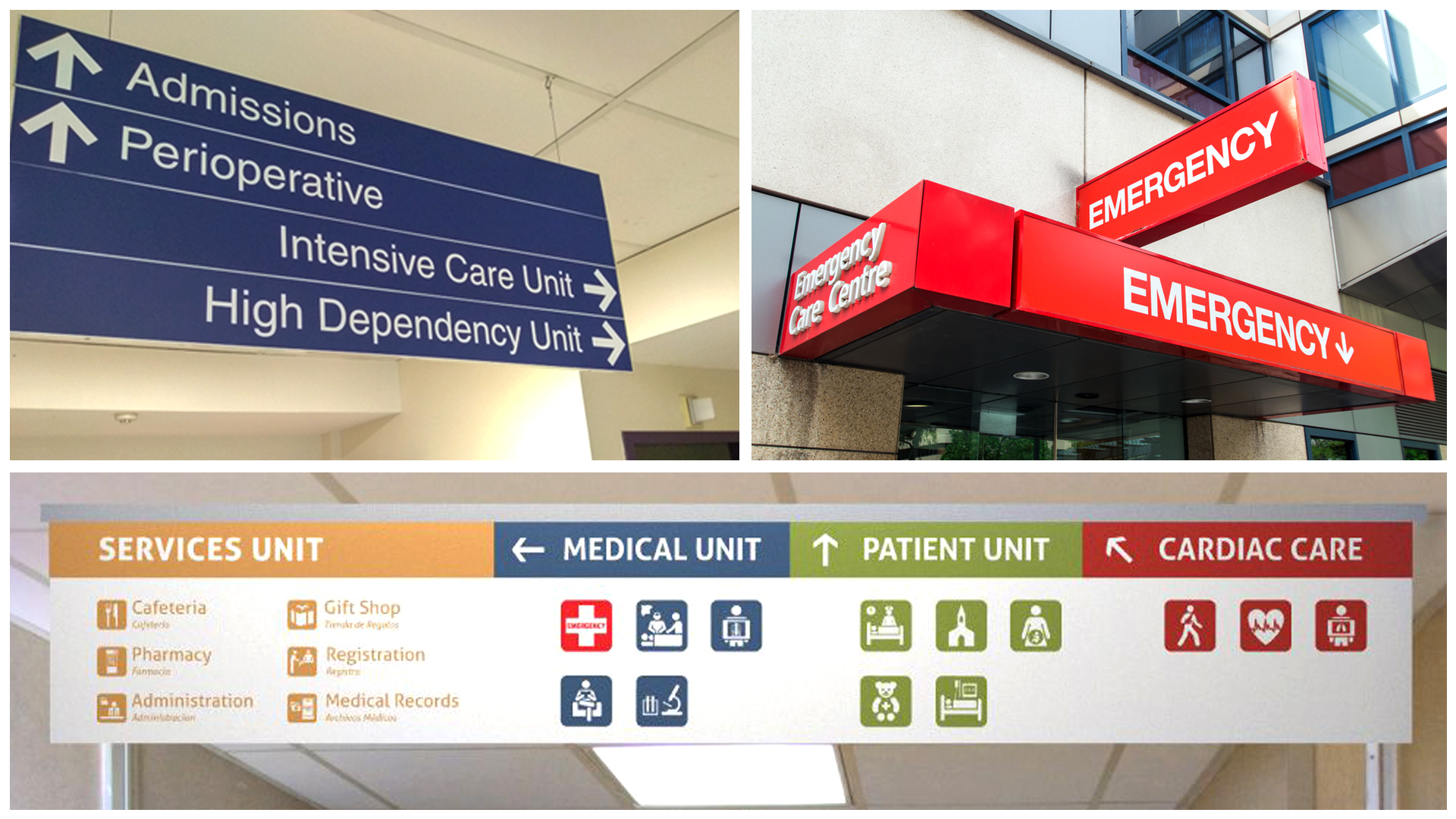
Hospitals and healthcare facilities are unlike almost any other built environment. People arrive stressed, emotional, distracted, and often under time pressure. In these moments, clear wayfinding and thoughtfully designed healthcare signage become more than visual elements. They become tools that guide behavior, reduce anxiety, and support better care experiences.
In St. Charles County, where medical campuses continue to grow and modernize in communities like Wentzville, St. Peters, O’Fallon, Lake Saint Louis, and St. Charles, effective hospital signage plays a critical role in helping facilities function smoothly. From large regional hospitals to outpatient clinics and specialty care centers, signage must balance clarity, compliance, durability, and design.
This guide explores how hospital wayfinding and healthcare signage systems work, what they include, and how healthcare facilities across St. Charles County can improve navigation, safety, and patient experience through well-planned signage solutions.
Why Hospital Wayfinding Matters in St. Charles County
Healthcare environments amplify stress by their very nature. Patients and visitors are often navigating unfamiliar buildings while managing medical concerns, emotional strain, or urgent situations. When wayfinding is unclear, that stress increases. Confusion leads to late appointments, missed departments, crowded hallways, and overwhelmed front-desk staff.
St. Charles County hospitals and clinics face additional challenges as facilities expand, add specialty departments, and connect multiple buildings across large campuses. What once worked for a single-building clinic may no longer serve a modern healthcare system with multiple entrances, parking areas, and departments.
Effective wayfinding signage helps healthcare facilities:
- Move patients and visitors confidently through complex spaces
- Reduce congestion at check-in desks and information counters
- Support staff efficiency by minimizing repeated directional questions
- Create a calmer, more professional environment from arrival to departure
At its best, hospital signage works quietly in the background. When done correctly, people rarely notice it because they simply arrive where they need to be without frustration or delay.
What Hospital Wayfinding Really Includes
Wayfinding is not a single sign or directory. It is a coordinated system that guides people step by step through a healthcare environment.
A complete hospital wayfinding system supports the full journey:
- From parking lot to entrance
- From entrance to registration or check-in
- From check-in to departments or clinics
- From departments to patient rooms or treatment areas
- From rooms to support services such as restrooms, imaging, pharmacy, or cafeteria
- From care areas back to exits and parking
Common breakdown points include:
- Multiple entrances without clear differentiation
- Similar department names that confuse visitors
- Long corridors without reinforcement signage
- Renovations or temporary closures without clear updates
- Inconsistent naming or visual styles across buildings
Hospitals that address these challenges through a cohesive signage strategy see smoother movement, fewer delays, and improved patient satisfaction.
Outcomes Healthcare Facilities Care About
Healthcare signage is not just about aesthetics. It directly affects daily operations and patient outcomes.
Well-designed hospital signage systems help:
- Guide patients and visitors quickly to the correct departments
- Reduce bottlenecks in busy hallways and waiting areas
- Support staff workflows with clear operational and restricted-area signage
- Improve overall patient experience through thoughtful, consistent design
- Meet health, safety, and accessibility regulations
Hospitals that invest in professional signage often see reduced strain on staff and a more predictable flow of foot traffic throughout the facility. In high-volume environments, even small improvements in navigation can have a measurable impact.
The Core Components of Hospital Wayfinding and Healthcare Signage
Exterior Hospital Signage
Exterior signage sets the tone before a visitor ever enters the building. It should immediately answer key questions: Where am I? Where do I park? Which entrance do I use?
Common exterior hospital signage includes:
- Campus identification signs that clearly identify the facility
- Building identification signs for multi-building campuses
- Parking lot signage for visitors, staff, emergency, and patient drop-off
- Directional signage guiding drivers and pedestrians to entrances
In communities across St. Charles County, exterior signage must also withstand weather, maintain visibility day and night, and remain legible from a distance.
Interior Directional and Wayfinding Signage
Once inside, interior wayfinding signage takes over. These signs guide movement through corridors, intersections, elevators, and stairwells.
Key interior wayfinding elements include:
- Corridor directional signs at decision points
- Intersection signs confirming direction and distance
- Elevator and stairwell signage for vertical navigation
- “You are here” maps in lobbies and major junctions
Effective interior signage reduces unnecessary wandering and prevents congestion in high-traffic areas.
Emergency and Critical Care Signage
Emergency departments and critical care areas demand absolute clarity. In urgent situations, hesitation caused by unclear signage can have serious consequences.
Emergency signage commonly includes:
- Clearly marked emergency entrances
- High-visibility directional signs to ER and critical care
- After-hours entrance signage
- Restricted-access and safety notices
These signs must be immediately recognizable, legible at a glance, and consistently placed throughout the facility.
Patient Room Identification and Functional Space Signage
Patient room signage serves multiple purposes. It identifies rooms clearly for visitors, supports staff workflows, and ensures compliance with accessibility requirements.
This category includes:
- Patient room identification signs
- Exam and procedure room signs
- Waiting room and reception signage
- Staff-only and operational area signs
Consistency in layout, typography, and placement helps users quickly understand how to read and use these signs throughout the facility.
ADA-Compliant Hospital Signage
Accessibility is a legal requirement and an ethical responsibility in healthcare environments. ADA-compliant signage ensures that all individuals, including those with visual impairments, can navigate the facility independently.
ADA hospital signage typically includes:
- Tactile characters and Grade 2 braille on applicable room signs
- Proper mounting heights and placement relative to doors
- High-contrast color combinations for readability
- Non-glare finishes to reduce visual strain
ADA signage is most effective when it is seamlessly integrated into the broader wayfinding system rather than treated as an afterthought.
Safety, Compliance, and Regulatory Signage
Healthcare facilities must communicate a wide range of safety and compliance information. These signs protect patients, staff, and visitors while supporting regulatory requirements.
Common safety signage includes:
- Infection control reminders
- Hazard and restricted access notices
- Fire exits and evacuation routes
- Emergency maps and life safety information
Clear, durable safety signage ensures critical information remains visible and understandable even during emergencies.
Branding and Patient Experience Enhancements
Wayfinding does not have to feel clinical or impersonal. Many hospitals enhance patient experience through branded wall graphics and informational displays.
These elements can:
- Reinforce the facility’s identity and values
- Reduce stress through calming visuals
- Provide educational or directional reinforcement
- Help departments feel distinct while remaining cohesive
When thoughtfully designed, branded graphics complement functional signage without distracting from navigation.
Planning a Successful Hospital Signage System
Hospitals that see the greatest success treat signage as a system, not a series of individual signs.
A practical planning process often includes:
- Conducting a wayfinding audit to identify pain points
- Creating a master sign schedule detailing every sign type and location
- Designing consistent templates for clarity and compliance
- Fabricating signage with durable, healthcare-appropriate materials
- Installing signage with minimal disruption to daily operations
Our team regularly works with healthcare facilities to help plan signage systems that are scalable, compliant, and aligned with real-world use.
Serving Healthcare Facilities Across St. Charles County
Healthcare signage needs vary across the region, from growing communities like Wentzville and Lake Saint Louis to established areas like St. Peters, O’Fallon, and St. Charles. Facilities may range from single-building clinics to multi-building hospital campuses.
A local signage partner understands:
- Regional growth patterns
- Local permitting considerations
- Facility-specific challenges tied to expansion and renovation
- The importance of responsive service and long-term support
Twin Clover Sign and Graphics works with healthcare facilities throughout St. Charles County to design and deliver signage solutions that support both daily operations and long-term growth.
How Twin Clover Sign and Graphics Supports Healthcare Signage Projects
Our work in healthcare signage focuses on creating systems that function smoothly in real environments. We provide services that include:
- Directional and wayfinding signage
- Emergency and critical care signage
- Patient room identification signs
- ADA-compliant braille and tactile signage
- Parking, entrance, and exterior signage
- Safety and compliance notices
- Branded wall graphics and informational displays
Every project is approached with attention to layout, durability, compliance, and clarity. The goal is always to create signage that supports patients, visitors, and staff without drawing unnecessary attention to itself.
If you are planning a hospital signage project or evaluating your current wayfinding system, you can start the conversation by visiting our contact page at https://twincloversign.com/contact/
Materials and Durability in Healthcare Environments
Healthcare signage must withstand far more than normal wear and tear. Unlike retail or office settings, hospital signs are exposed to constant foot traffic, frequent cleaning, disinfectants, and environmental stress. Material selection directly affects how long signage remains legible, compliant, and professional in appearance.
Common material considerations for hospital signage include:
- Non-porous surfaces that can handle hospital-grade disinfectants
- Durable substrates that resist fading, chipping, or warping
- Finishes that minimize glare while maintaining high contrast
- Materials suitable for both interior and exterior environments
Interior hospital signage often relies on acrylics, high-pressure laminates, aluminum, and engineered plastics designed for repeated cleaning. Exterior signage typically requires weather-resistant metals, UV-stable finishes, and secure mounting systems that maintain visibility year-round.
Selecting the right materials from the beginning reduces long-term replacement costs and ensures signage continues to perform as intended.
Digital and Updatable Sign Systems in Healthcare Facilities
Hospitals are constantly evolving. Departments move, providers change, and services expand. For this reason, many healthcare facilities incorporate signage systems that can be updated without full replacement.
Updatable signage solutions may include:
- Paper or insert-based directory systems
- Modular panels that allow department changes
- Digital displays for directories and announcements
- Hybrid systems that combine static and changeable elements
These systems are particularly useful in large campuses, medical office buildings, and specialty care centers where information changes frequently. Planning for flexibility helps facilities adapt without compromising clarity or visual consistency.
Designing for Reduced Anxiety and Better Patient Flow
Research and industry experience consistently show that clear signage reduces stress in healthcare environments. When people understand where they are and where they are going, anxiety decreases and confidence increases.
Effective hospital signage design focuses on:
- Clear visual hierarchy that prioritizes essential information
- Consistent terminology across departments
- Simple language that avoids internal jargon
- Strategic placement at decision points
- Visual cues such as color, icons, and spacing to reinforce direction
Wayfinding systems that feel intuitive allow patients and visitors to focus on care rather than navigation. This benefits not only visitors but also staff who rely on predictable movement patterns throughout the facility.
A Practical Wayfinding Audit for Hospitals and Clinics
Before new signage is designed, many facilities benefit from a wayfinding audit. This process evaluates how people actually move through the space, rather than how designers assume they do.
A wayfinding audit typically reviews:
- Arrival points and parking access
- Visibility of entrances
- Clarity of lobby and check-in areas
- Decision points within corridors
- Vertical circulation through elevators and stairs
- Exit paths back to parking
Observing real-world behavior often reveals unexpected pain points. Addressing these areas through targeted signage improvements can significantly improve flow without a full system overhaul.
Creating a Comprehensive Hospital Sign Schedule
A sign schedule is the foundation of an organized healthcare signage system. It documents every sign type, location, message, size, material, and compliance requirement.
A complete hospital sign schedule helps:
- Maintain consistency across buildings and departments
- Ensure ADA compliance is addressed systematically
- Support phased installations during renovations
- Simplify future updates and expansions
- Reduce errors during fabrication and installation
Hospitals that invest time in detailed sign schedules often experience smoother implementation and fewer last-minute changes.
Installation Planning With Minimal Disruption
Installing signage in an active healthcare environment requires careful coordination. Patient care cannot pause for construction or installation activities.
Successful installations typically involve:
- After-hours or off-peak scheduling
- Temporary signage during transitions
- Clear coordination with facility staff
- Phased rollouts for large campuses
- Secure mounting to avoid safety risks
Proper planning ensures signage upgrades improve the environment without interrupting daily operations.
Healthcare Signage Across St. Charles County Communities
Healthcare facilities throughout St. Charles County face unique challenges based on size, layout, and growth patterns.
In Wentzville and Lake Saint Louis, expanding communities often require signage systems that can grow alongside new construction. In St. Peters and O’Fallon, established campuses may need signage updates to reflect renovations or service changes. In St. Charles, historic areas sometimes require signage that balances modern clarity with architectural context.
Local expertise matters when navigating these differences. Understanding regional development patterns and facility needs allows signage systems to be tailored for long-term success.
Why Specialized Healthcare Signage Experience Matters
Healthcare signage is not interchangeable with other commercial signage. It requires a deep understanding of:
- Wayfinding psychology
- ADA and accessibility standards
- Infection control considerations
- Facility operations and patient flow
- Long-term durability requirements
Working with a signage partner experienced in healthcare environments helps ensure signage supports both compliance and care delivery.
How Twin Clover Sign and Graphics Supports Healthcare Facilities
At Twin Clover Sign and Graphics, our work with healthcare signage focuses on clarity, compliance, and functionality. We design and deliver signage systems that help patients, visitors, and staff navigate healthcare environments with confidence.
Our healthcare signage services include:
- Directional and wayfinding signage systems
- Emergency and critical care signage
- Patient room and department identification
- ADA-compliant braille and tactile signage
- Parking, entrance, and exterior signage
- Safety and compliance notices
- Branded wall graphics and informational displays
Every project is approached with attention to layout, material performance, and regulatory requirements. Our goal is to create signage that works quietly and effectively in real-world healthcare settings.
If you are planning a new hospital signage project, updating an existing wayfinding system, or preparing for future expansion, our team can help evaluate your needs and develop a clear plan. You can reach out to us anytime through our contact page at https://twincloversign.com/contact/
A Simple Hospital Wayfinding Checklist
As a final takeaway, healthcare facilities can use this checklist when evaluating their signage systems:
- Clear exterior identification and parking signage
- Intuitive interior directional signage at decision points
- Consistent department naming and room identification
- ADA-compliant signage integrated throughout the facility
- Safety and compliance notices clearly visible
- Materials suited for frequent cleaning and high traffic
- A plan for updates and future expansion
When these elements work together, hospital wayfinding becomes a supportive part of the care experience rather than a source of frustration.
Final Thoughts
Hospital wayfinding and healthcare signage play a critical role in how facilities function and how patients experience care. In St. Charles County, where healthcare continues to evolve alongside growing communities, clear and thoughtful signage systems help facilities stay accessible, efficient, and welcoming.
By approaching signage as a complete system and working with specialists who understand healthcare environments, hospitals and clinics can create spaces that feel easier to navigate and better aligned with patient needs.
If you would like help planning or improving your healthcare signage, Twin Clover Sign and Graphics is always available to start the conversation.
Back