
Medical Office Signs in St. Peters, MO
Medical office signage has a bigger job than simply displaying a practice name on the outside of a building. For patients, signs help answer important questions before they ever reach the front desk. Am I in the right place? Where should I park? Which entrance should I use? Where do I check in? Which hallway leads to the exam rooms?
For medical offices in St. Peters, MO, signage can shape the entire patient experience. A clear, professional, well-planned sign system can make a clinic feel more organized, more approachable, and easier to navigate. That matters for primary care offices, dental practices, urgent care clinics, therapy offices, specialty providers, imaging centers, and multi-tenant healthcare buildings throughout St. Peters and the surrounding St. Charles County area.
At Twin Clover Sign and Graphics, we create custom, high-quality signage for businesses that need to be seen, understood, and remembered. For medical offices, that means combining exterior visibility, interior clarity, accessible signage, professional branding, and durable materials into one cohesive signage plan.
Why Medical Office Signs Matter in St. Peters
St. Peters is home to a wide mix of professional offices, clinics, service businesses, shopping centers, medical plazas, and healthcare-related spaces. Many practices are located in multi-tenant buildings or commercial areas where patients may be seeing several office names, suite numbers, parking signs, and entrance points at the same time.
That is where signage becomes more than decoration. It becomes part of the patient journey.
A patient might be visiting a practice for the first time. They may be running late. They may be bringing a child, helping an elderly parent, or dealing with a health concern that already has them distracted. If the building sign is hard to see, the suite number is unclear, or the interior wayfinding is confusing, that small moment of friction can affect how the visit feels.
Strong medical office signage helps prevent that. It gives people confidence that they have arrived at the right location. It supports a smoother check-in process. It reduces unnecessary questions for front desk staff. It also helps a practice present itself as organized, established, and professional.
What Counts as Medical Office Signage?
Medical office signs include many different sign types, both inside and outside the building. Some are highly visible branding pieces. Others are practical directional signs. Some are required for accessibility or safety. The best sign systems usually include a thoughtful combination of all three.
Common medical office signs include:
- Exterior building signs
- Monument signs
- Pylon signs
- Multi-tenant sign panels
- Window graphics
- Door lettering
- Suite signs
- Lobby signs
- Reception signs
- Directional signs
- Hallway signs
- ADA signs
- Restroom signs
- Room identification signs
- Parking signs
- Entrance and exit signs
- Safety and compliance signs
- Branded wall graphics
- Vehicle graphics for mobile or service-based providers
When these signs are planned together, they create a more consistent experience. The exterior sign helps patients find the building. The window and door graphics confirm the office. The lobby sign reinforces the brand. The wayfinding and ADA signs help people move through the space without confusion.
Exterior Signs for Medical Offices
The exterior sign is often the first impression a patient has of a medical office. It needs to be visible, readable, properly placed, and appropriate for the building.
For a standalone medical office in St. Peters, a custom building sign or monument sign may be one of the most important branding investments. If the practice is located along a busy road or inside a professional office park, patients need to be able to spot the sign quickly while driving or entering the property.
Exterior medical office signs may include dimensional letters, illuminated signs, wall signs, monument signs, tenant panels, or branded entrance signs. The right choice depends on the building layout, landlord requirements, city regulations, visibility needs, and the practice’s brand style.
At Twin Clover Sign and Graphics, our team can help medical offices think through those details before production begins. A sign that looks good on a design proof still needs to work in the real world. That means considering viewing distance, contrast, surrounding architecture, lighting, traffic flow, and installation conditions.
Monument Signs and Multi-Tenant Signs
Many medical offices in St. Peters are not located in isolated buildings. They may be part of a professional plaza, business park, retail center, or shared healthcare building. In these settings, monument signs and multi-tenant signs are especially useful.
A monument sign provides a more permanent, grounded presence at the property entrance. It can help patients identify the building before they reach the parking lot. For medical offices, this is especially helpful when the building sits back from the road or shares access with other businesses.
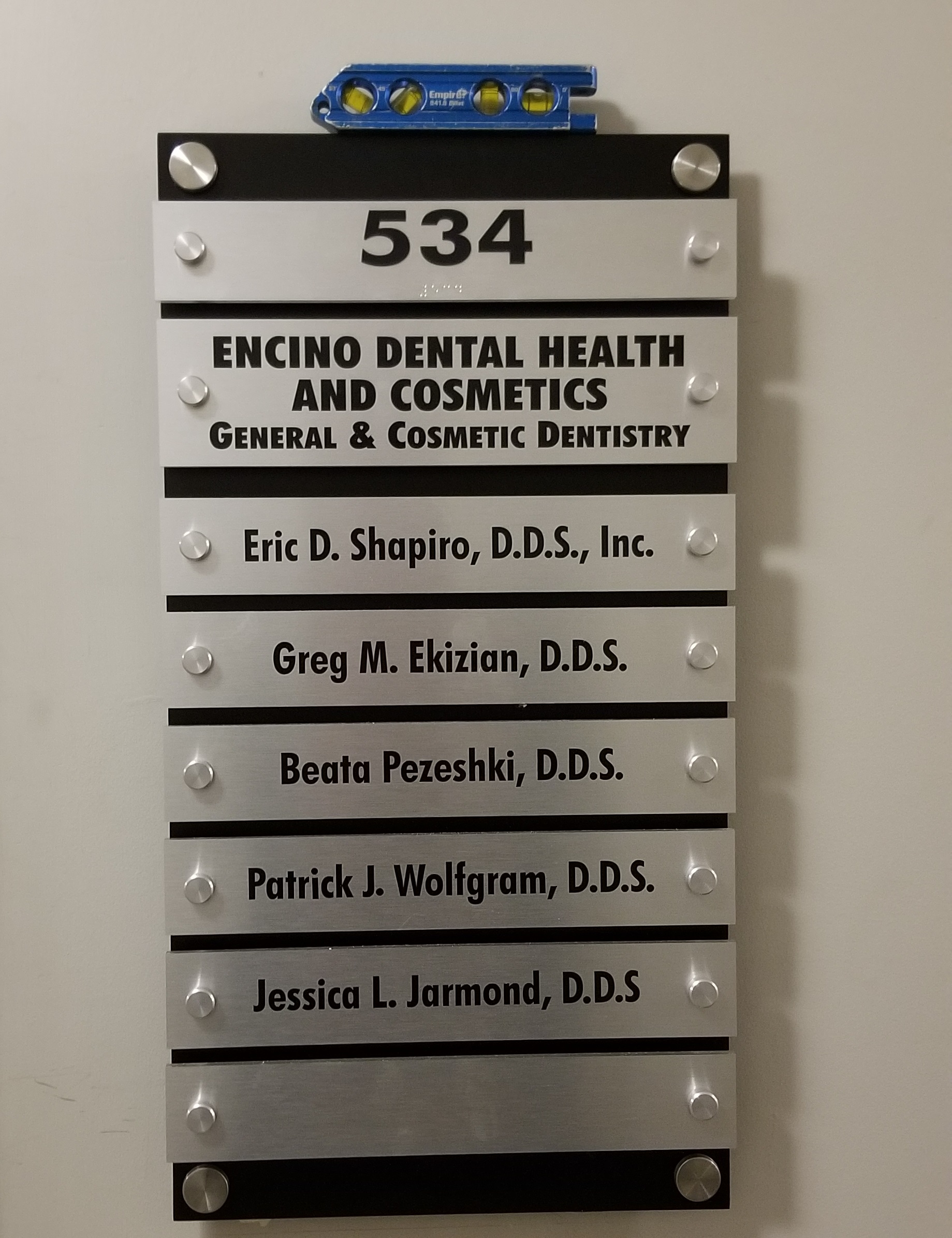
Multi-tenant signs are also important when several practices or professional offices share one property. A clean tenant panel with consistent spacing, readable typography, and organized branding makes the whole property feel more polished. It also helps patients quickly identify the correct office without circling the parking lot or walking into the wrong suite.
For medical office buildings with multiple providers, a well-designed exterior sign system can create order before the patient even steps inside.
Window Graphics and Door Lettering
Window graphics and door lettering are practical, professional, and versatile. They can display a practice name, logo, suite number, hours, phone number, website, entry instructions, or privacy messaging.
For medical offices, window graphics can also provide a more comfortable interior environment. Frosted vinyl or privacy film can help shield waiting rooms, treatment areas, consultation rooms, or administrative spaces from direct outside visibility while still allowing natural light into the office.
Door graphics are especially helpful for confirming the correct entrance. This matters in multi-suite buildings where several doors may look similar. A clear logo, suite number, and office name can reduce confusion and help patients feel more certain when they arrive.
Window graphics can be simple and clean, or they can be more branded and decorative. Either way, they should be easy to read and aligned with the office’s overall visual identity.
Lobby and Reception Signs
Once a patient walks inside, the lobby sign becomes one of the strongest brand touchpoints in the office. A custom reception sign can make a medical practice feel more established and intentional.
Lobby signs may include dimensional letters, acrylic panels, routed signs, logo displays, wall graphics, or other custom materials. The design should fit the tone of the practice. A pediatric office may want something bright and welcoming. A dental office may want something clean and modern. A specialty medical office may want a more refined and calming look.
The best lobby signs do not overwhelm the space. They create a sense of arrival. They reassure patients that they are in the right place. They also give the office a finished, professional feel that supports the overall patient experience.
Twin Clover Sign and Graphics provides indoor signs and custom business signs that can be tailored to the look, layout, and personality of the space. For medical offices, that custom approach matters because no two practices feel exactly the same.
Directional and Wayfinding Signs
Directional signs are one of the most important parts of a medical office sign package. They help visitors move confidently from one area to another.
In a medical setting, wayfinding signs may point to:
- Reception
- Check-in
- Check-out
- Exam rooms
- Restrooms
- Lab areas
- Imaging
- Therapy rooms
- Elevators
- Stairs
- Waiting areas
- Billing offices
- Exits
- Staff-only areas
Even in a smaller office, directional signs can make a big difference. A simple check-in sign, restroom sign, and hallway marker can reduce repeated questions and make the space feel easier to understand.
In larger clinics or multi-provider buildings, wayfinding becomes even more important. Patients should not have to rely on staff members for every turn. A coordinated system of hallway signs, room signs, directories, and arrows can guide people naturally through the building.
The key is consistency. Directional signs should use clear wording, consistent colors, readable type, and logical placement. If one sign says “Reception” and another says “Front Desk,” visitors may hesitate. If arrows are too small or placed too late, people may miss the turn. Good wayfinding thinks ahead.
ADA Signs and Accessibility in Medical Offices
Accessibility is essential in healthcare environments. Medical offices serve people of different ages, mobility levels, visual abilities, and health conditions, so signage should be designed with accessibility in mind from the start.
ADA signs commonly include tactile characters, Braille, appropriate contrast, non-glare finishes, and proper mounting placement. These signs are often used for permanent rooms and spaces such as restrooms, exam rooms, stairwells, elevators, exits, and other identified spaces.
The ADA Standards for Accessible Design include detailed guidance for accessible signage, including requirements related to tactile characters, Braille, visual contrast, finish, character style, and mounting location. Medical offices should always confirm project-specific requirements with the appropriate code professionals, property managers, and local authorities, especially during new buildouts, renovations, or major signage updates.
For many practices, ADA signage is not the most exciting part of the project, but it is one of the most important. A professional sign plan can help make these signs feel consistent with the office’s branding while still serving their accessibility purpose.
Twin Clover Sign and Graphics can help medical offices plan ADA and room identification signage as part of a larger interior sign package. That approach helps avoid the common problem of adding generic signs later that do not match the rest of the space.
Safety, Compliance, and Informational Signs
Medical offices also need signs that support safety, privacy, and smooth operations. These may not be the most visually prominent signs, but they play an important role in how the office functions.
Examples include staff-only signs, emergency exit signs, restricted area signs, lab signs, x-ray area signs, patient notice signs, hand hygiene reminders, check-in instructions, billing signs, and directional notices for specific departments.
The goal is to keep the message clear and professional. Too many signs can create clutter. Too few signs can create confusion. The best approach is to identify what patients and staff actually need to know at each point in the space.
In healthcare settings, signage should be calm, clear, and easy to understand. A well-designed safety or informational sign does not need to feel harsh. It can still match the office’s visual style while communicating the necessary message.
Parking Lot and Entrance Signs
The patient experience often begins in the parking lot. Clear parking and entrance signs can help patients know where to go before they even get out of the car.
Medical office parking signs may include accessible parking, patient parking, staff parking, visitor parking, delivery areas, drop-off zones, entrances, exits, and building directories. For urgent care clinics or high-traffic practices, parking and entrance signage can be especially important because patients may arrive quickly and need immediate clarity.
A good parking sign system should be readable from the right distance and positioned where drivers need the information. It should also be coordinated with building signage so the property feels organized instead of pieced together.
For practices in shared plazas, parking signage may need to coordinate with landlord rules and property-wide sign standards. Planning early can help avoid issues later.
Medical Office Sign Permits and Local Planning in St. Peters
Exterior signage often involves more than design and fabrication. In St. Peters, permanent and temporary signs are regulated by the city, and sign permits may be part of the process. The City of St. Peters Planning, Zoning & Development page provides sign information, applications, and resources for businesses planning signage projects.
This is one reason it helps to start the sign conversation early. A medical office may need to consider zoning, landlord criteria, property management rules, building elevations, sign dimensions, lighting, installation methods, and permit timing.
The city’s sign regulation materials also include details for different sign types, including wall signs, window signs, directional signs, and identification signs. Because requirements can vary depending on zoning, property type, and sign type, medical offices should confirm current regulations before moving forward.
A local sign company can be helpful during this stage because signage is not just about making something attractive. It is also about creating something that fits the building, follows the required process, and can be installed properly.
Design Tips for Medical Office Signs
The best medical office signs are usually simple, clear, and consistent. That does not mean they have to be boring. It means the design should support the purpose of the sign.
Here are a few design principles that matter in healthcare signage:
Keep readability first
Patients need to understand signs quickly. Decorative fonts, low contrast, crowded layouts, and small lettering can make a sign harder to read. This is especially important for exterior signs, directories, room signs, and directional signage.
Use consistent branding
A medical office should feel cohesive from the building sign to the lobby sign to the hallway signs. Consistent fonts, colors, materials, and logo usage help create a polished environment.
Choose materials that fit the space
Acrylic, aluminum, dimensional letters, vinyl, PVC, and other materials each create a different look and level of durability. A sign for a busy hallway may need different materials than a decorative lobby sign.
Think about lighting
Exterior signs should be readable in the conditions where patients will see them. Interior signs should avoid glare, especially in areas with strong overhead lighting or windows.
Plan for updates
Medical offices change. Providers may be added. Hours may shift. Departments may move. Suite numbers may change. Some signs should be designed so future updates are easier.
Avoid sign clutter
A sign system should guide people, not overwhelm them. Too many messages in one area can make everything harder to process.
Signage for Different Types of Medical Practices
Every healthcare office has different signage needs. A primary care office may need strong exterior identification, suite signs, ADA room signs, and simple interior wayfinding. A dental office may place more emphasis on a welcoming lobby sign, window graphics, and polished branding. An urgent care clinic may need maximum exterior visibility, illuminated signage, parking signs, entrance signs, and hours displayed clearly.
Physical therapy offices, chiropractic clinics, pediatric offices, dermatology practices, imaging centers, labs, and specialty clinics each have their own patient flow. Some spaces need privacy graphics. Others need larger wayfinding systems. Some need branded wall graphics to make the office feel more comfortable and memorable.
This is why custom signage is valuable. Medical office signs should not be treated as one-size-fits-all products. They should be built around the practice, the building, the patient experience, and the long-term goals of the office.
Serving St. Peters and Nearby St. Charles County Communities
Although this topic focuses on medical office signs in St. Peters, MO, many healthcare practices throughout St. Charles County face similar signage needs. Twin Clover Sign and Graphics works with businesses across the local area, including St. Peters, St. Charles, O’Fallon, Wentzville, Lake St. Louis, Cottleville, Dardenne Prairie, and nearby communities.
For medical offices near Mid Rivers Mall Drive, Mexico Road, Jungermann Road, Highway 70, Highway 94, or other busy local corridors, visibility and clarity can make a real difference. Patients may be coming from several surrounding communities, and they need the office to be easy to find.
Local signage should also fit the building and neighborhood. A medical office in a professional plaza may need a different sign style than a standalone clinic. A practice in a multi-tenant building may need exterior tenant panels, interior directories, suite signs, and a coordinated lobby sign. A healthcare provider with mobile services may also benefit from vehicle graphics that build recognition throughout St. Charles County.
How Twin Clover Sign and Graphics Approaches Medical Office Sign Projects
At Twin Clover Sign and Graphics, we believe good signage starts with listening. Before jumping into fabrication, it helps to understand the practice, the building, the patients, the budget, and the goals of the project.
Our process can include consultation, planning and design, skilled fabrication, expert installation, and follow-through to make sure the final signage supports the business well. For medical offices, this process is especially useful because a complete sign package may involve several different sign types.
A medical office may need exterior signage for visibility, window graphics for privacy, a lobby sign for branding, ADA signs for accessibility, and wayfinding signs for patient flow. Handling those pieces through one coordinated process can help the finished result feel more consistent.
We create custom signage that is built around the needs of each project. That may include outdoor signs, indoor signs, directional signs, window graphics, wall murals, banners, vehicle graphics, and other custom sign solutions.
When Should a Medical Office Start Planning Signage?
The earlier, the better. Signage should not be treated as the final detail after everything else is finished.
If a medical office is opening a new location, moving into a new suite, renovating a space, rebranding, adding providers, or updating an outdated building sign, signage should be part of the planning process as soon as possible.
Early planning gives time to review building requirements, city regulations, landlord criteria, design options, material choices, fabrication timelines, and installation scheduling. It also allows the interior and exterior signs to work together instead of being ordered separately in a rush.
For healthcare spaces, timing matters because signage often needs to be ready before opening day or before patients begin using a new layout. A clear plan helps reduce stress and avoid last-minute compromises.
Final Thoughts: Better Signs Create a Better Patient Experience
Medical office signs in St. Peters, MO should do more than identify a building. They should help patients find the right location, enter confidently, navigate the space, and feel comfortable throughout their visit.
From exterior building signs and monument signs to lobby signs, window graphics, ADA signs, directional signs, parking signs, and branded wall graphics, every sign plays a role in the larger experience.
At Twin Clover Sign and Graphics, our goal is to help medical offices create signage that looks professional, communicates clearly, and supports the people who use the space every day. Whether you are opening a new clinic, refreshing an existing office, updating your brand, or improving patient wayfinding, a thoughtful sign plan can make your medical office easier to find and easier to navigate.
To start planning custom medical office signs in St. Peters, MO or the surrounding St. Charles County area, visit our contact page to schedule a consultation with Twin Clover Sign and Graphics.
Back